Call Us: 08045477254

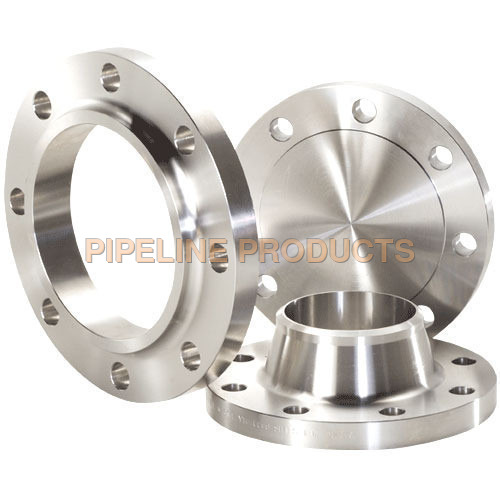
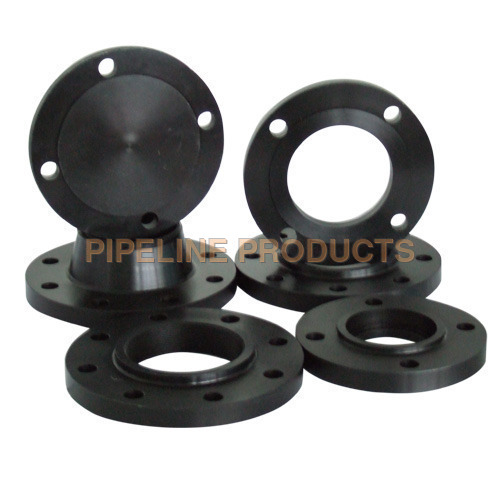
ANSI Flange
68 INR/Piece
Product Details:
- Application Pipe Connection / Petrochemical / Industrial / Water Supply
- Dimension (L*W*H) As per ANSI specification and custom order
- Feature Corrosion Resistant, High Strength, Leak Proof
- Grade ASTM A105 / A182 / A350 / A694 / F304/ F316 etc.
- Purity Metallic Alloys, Industrial Grade
- Product Type Flange
- Material Carbon Steel / Stainless Steel / Alloy Steel
- Click to View more
X
ANSI Flange Price And Quantity
- 500 , , Piece
- 68 INR/Piece
ANSI Flange Product Specifications
- 150# to 2500#
- Flange
- As per ANSI specification and custom order
- Pipe Connection / Petrochemical / Industrial / Water Supply
- Other
- Corrosion Resistant, High Strength, Leak Proof
- ANSI
- Round
- Metallic Alloys, Industrial Grade
- Forged
- 1/2 to 48 (DN15 - DN1200)
- Silver
- ASTM A105 / A182 / A350 / A694 / F304/ F316 etc.
- Carbon Steel / Stainless Steel / Alloy Steel
- Raised Face (RF) / Flat Face (FF) / Ring Type Joint (RTJ)
- Wooden Cases / Pallets
- Within ANSI/ASME Standard Limits
- Standard, Grade, Size, Pressure, Heat No.
- -29C to 593C
- Ultrasonic Inspection, PMI Test, Hydrostatic Test
ANSI Flange Trade Information
- 500 , , Piece Per Week
- 2-5 Days
Product Description
Ansi Flange
We are a manufacturer and supplier of Ansi Flange that are known in the market for high quality. We have always met the expectations of buyers and in a short frame of time, we have attained glorious success. The robust construction, fair rates and accurate dimension have allowed us to stand out in the market and attract more and more customers towards us. To get premium quality of Ansi Flange contacts us freely, we will offer the same at your doorstep.
Stainless Steel Flanges
|
Sr. No. |
Material |
Size |
Class |
Specification |
Items |
||
|
1 |
Forged Flanges |
15 NB to 750 NB |
150#300#600# |
900#1500# |
A-182ANSI B16.5 |
SORF WNRF BLRF SWRF |
LAP Joint Threaded Reducing |
|
2 |
Plate Flanges |
15 NB to 500 NB |
ASA 150 Table D Table E DIN Table ND-6 ND-10 |
ASA 300 Table F Table H ND-16 ND-25 ND-40 |
A-240,ANSI B16.5 |
SORFBLRF |
LAP Joint & Spectacle |
Note:-
|
|
||||
|
Grade |
304 |
316L |
310S |
410 |
|
Test Certificate |
Manufacturer Test Certificate Under Third Party Inspection |
- |
- |
- |
|
Specialize |
As Per Drawing |
- |
- |
- |
Versatile Connection Options
Choose from butt weld, socket weld, and threaded end connections to match diverse piping requirements. The flanges support both welded and bolted installations, simplifying integration with new or existing systems while maintaining mechanical integrity and consistency.
Industry-Compliant Manufacturing
Made to conform with international standards such as ANSI, ASME B16.5, DIN, and JIS, each flange undergoes rigorous quality assurance. Processes include ultrasonic inspection, Positive Material Identification (PMI), and hydrostatic testing, ensuring reliability, safety, and sustained performance in demanding environments.
Durability and Protection
Forged using advanced technics from industrial-grade metallic alloys, these round flanges display high strength and corrosion resistance. The polished surface or rust-proof coating further enhances durability, making them suitable for operations subject to temperature ranges from -29C to 593C.
FAQs of ANSI Flange:
Q: How does the face type (RF, FF, RTJ) influence the flanges sealing and application?
A: The choice of face typeRaised Face (RF), Flat Face (FF), or Ring Type Joint (RTJ)affects the sealing method and application suitability. RF provides enhanced gasket compression, FF is ideal for cast iron or low-pressure systems, while RTJ is used for high-pressure, high-temperature environments requiring metal-to-metal seals.Q: What quality testing processes are performed on these ANSI flanges?
A: ANSI flanges undergo ultrasonic inspection, Positive Material Identification (PMI), and hydrostatic testing. This ensures each product meets strict industry standards for strength, leak proof integrity, material purity, and overall reliability before delivery.Q: When should I choose butt weld, socket weld, or threaded end connections for installation?
A: Butt weld connections are preferred for high-pressure, high-temperature systems for their smooth flow characteristics. Socket weld is suitable for smaller sizes and moderate applications, while threaded ends aid quick assembly and disassembly in low-pressure scenarios.Q: Where can these flanges be used in industrial operations?
A: These flanges are extensively used in pipe connection for petrochemical plants, water supply systems, and various industrial sectors. Their compatibility with multiple standards and materials makes them versatile for installation in global projects.Q: What benefits do the high-pressure ratings (150# to 2500#) provide for these flanges?
A: The wide pressure range allows safe operation under varying loads and conditions. Flanges rated from 150# to 2500# ensure structural integrity and leak-proof performance across moderate to extremely demanding industrial environments.Q: How does the corrosion-resistant design enhance the lifespan of each flange?
A: A polished surface or rust-proof coating and the use of high-grade alloys protect flanges from deterioration in corrosive environments, extending service life and minimizing maintenance needs.Tell us about your requirement

Price:
Quantity
Select Unit
- 50
- 100
- 200
- 250
- 500
- 1000+
Additional detail
Mobile number
Email

Other Products in 'MS Flanges' category

PIPELINE PRODUCTS
GST : 27CTRPK1677D1ZC
GST : 27CTRPK1677D1ZC
- Plot No. 281/282, Sunder Transport Lane, Near Ganesh Hotel Mazgaon, Darukhana,Mumbai - 400010, Maharashtra, India
- Phone : 08045477254
- Mr. Abrar Ahmed Khan (Proprietor)
- Mobile : 08045477254
-
 Send Inquiry
 Send Inquiry
|

 Send Inquiry
 Send SMS
PIPELINE PRODUCTS
All Rights Reserved.(Terms of Use)
Developed and Managed by Infocom Network Private Limited.
Developed and Managed by Infocom Network Private Limited.

